
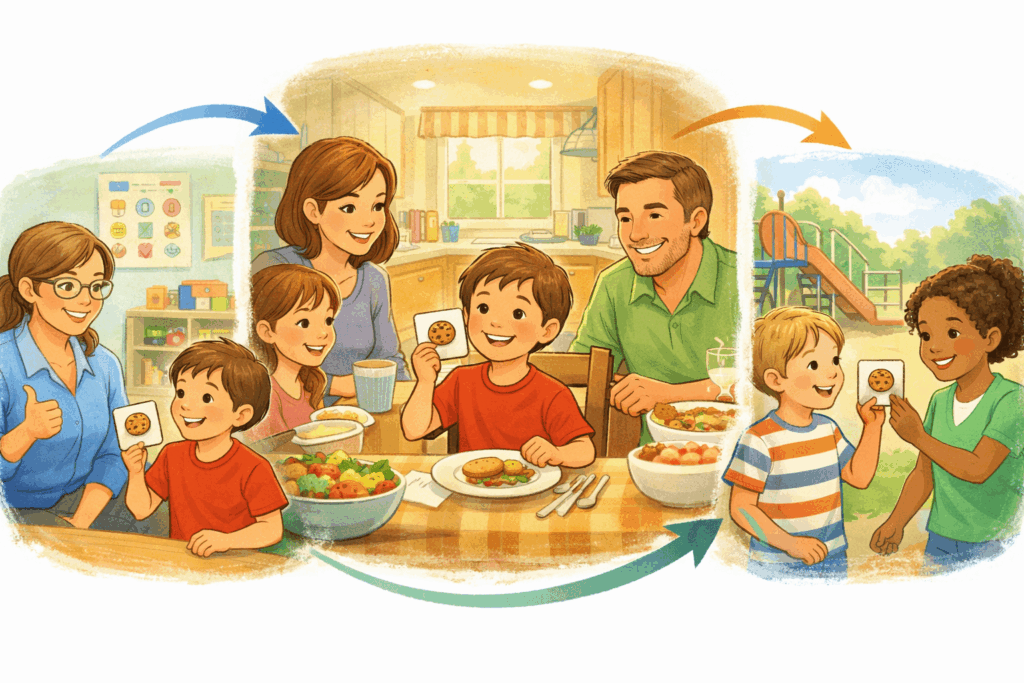
Understanding generalization in ABA therapy is crucial for promoting lasting behavior changes, especially in home environments. For families navigating autism support services, grasping how skills transfer across different settings can make the difference between therapy progress that stays in the clinic and real-world independence. This article explores practical strategies to help your child generalize learned behaviors successfully.
Generalization in ABA therapy refers to a child’s ability to apply learned behaviors and skills across different environments, situations, and with various people. According to the Behavior Analyst Certification Board, true mastery means skills aren’t just performed in controlled therapy sessions—they’re transferred to everyday life contexts including school, home, and community settings.
The process ensures that behaviors remain adaptable rather than context-specific. For instance, a child who learns to greet people during therapy sessions should naturally greet family members at home, peers at school, and community members in public spaces. This varied practice reinforces the behavior and increases its long-term retention.
According to research published by the Association for Behavior Analysis International, there are three primary types of generalization:
Another critical dimension involves generalizing skills across different people. A child might excel practicing with their therapist but struggle with parents or teachers. Effective ABA therapy addresses this by systematically introducing multiple communication partners, ensuring children understand that appropriate behavior is expected across all social interactions.
The importance of generalization in ABA therapy cannot be overstated—it’s the bridge between clinical progress and real-world independence. Research from the Cambridge Center for Behavioral Studies demonstrates that without generalization, therapy gains rarely translate into meaningful daily life improvements.
Skill transfer is essential for achieving long-term behavior change. When a child successfully generalizes a behavior, they’ve truly mastered it and can apply it independently across situations without constant prompting. For example, if a child learns to request help during treatment, they should confidently ask for assistance at home, in school, or in community settings. This independence is what enables children to function with greater autonomy and confidence.
Moreover, generalization helps reinforce positive behaviors while reducing maladaptive ones. According to Autism Speaks, when children understand that specific behaviors are consistently expected and rewarded across settings, they’re more likely to adopt them permanently. This consistency across environments creates resilience against changes in context or routine—crucial for long-term success.
Despite its importance, achieving generalization presents significant challenges. Understanding these obstacles helps parents and therapists develop more effective intervention strategies.
One primary obstacle is environmental variation. Children may master skills in structured, predictable therapy settings but struggle in dynamic home or school environments. These settings introduce different stimuli, distractions, and unpredictable elements that can impede skill application.
Different caregivers often use varying methods to reinforce behaviors, provide cues, or interact with the child. This inconsistency creates confusion about behavioral expectations. For example, a child might receive enthusiastic verbal praise from their therapist but minimal reinforcement from parents, hindering the generalization process.
The complexity of targeted skills also impacts generalization. Research from the Journal of Applied Behavior Analysis shows that simpler skills like basic communication generalize more easily than complex behaviors such as emotional regulation or problem-solving. More intricate skills require comprehensive support systems and consistent reinforcement across all environments.
Promoting generalization at home requires systematic, consistent approaches supported by behavioral science research.
One effective strategy is to create multiple opportunities for skill practice across different home contexts. If your child is learning to follow instructions, practice during varied daily activities—such as mealtime, playtime, bedtime routines, and household chores. The National Autism Center emphasizes that varied practice contexts significantly increase the likelihood of generalization.
Consistent reinforcement from different family members helps children understand that behaviors are universally expected. All caregivers should receive training on how to prompt, reinforce, and support the child’s skill use. This unified approach ensures consistent messages and expectations, dramatically increasing generalization success rates.
Learn more about involving siblings in ABA therapy goals and how family collaboration enhances outcomes.
Consistency in routines and expectations is fundamental. Establish clear, predictable routines that naturally incorporate learned skills. For example, if your child is learning polite greetings, create a morning and evening greeting routine with all family members. This consistency makes the behavior a natural part of daily life.
Visual aids like picture schedules or cue cards provide concrete reminders of expected behaviors. Social stories—short narratives describing situations, expected behaviors, and positive outcomes—are particularly effective for children who benefit from visual and narrative supports. These tools bridge the gap between therapy sessions and real-world application.
Parents serve as the primary architects of generalization success. As the most consistent figures in a child’s life, parents have unparalleled opportunities to reinforce and practice therapeutic skills across daily contexts.
Parents should thoroughly understand behaviors targeted in therapy and consistently reinforce them at home through verbal praise, tangible rewards, or other reinforcement methods aligned with the child’s preferences. According to Autism Science Foundation, this consistency helps children understand that behaviors are valued universally, increasing long-term maintenance.
Effective collaboration between parents and therapists ensures unified approaches to teaching and reinforcing behaviors. Parents should maintain regular communication with therapists to understand current goals, strategies, and progress. This partnership allows for:
Discover how technology enhances family involvement in ABA therapy and strengthens collaboration between professionals and families.
Real-world examples illustrate how systematic generalization strategies produce meaningful outcomes.
One child learned to use an augmentative communication device to request items during therapy. With consistent practice and reinforcement at home, the child successfully used the device with family members, teachers, and peers. This generalization dramatically improved the child’s quality of life by reducing frustration and increasing independence across all environments.
Another child was taught a structured morning routine during therapy sessions, including brushing teeth, dressing, and eating breakfast. With parental support and daily practice at home, the child eventually completed the entire routine independently without prompts. This successful generalization developed critical self-care skills and enhanced autonomy.
A child who learned turn-taking during therapy successfully generalized this skill to family playtime when siblings and parents participated. This improvement extended beyond home to school and community activities, demonstrating how consistent practice with multiple partners creates robust, transferable social skills.
Systematic measurement ensures that children truly master and apply learned skills across contexts.
Parents and therapists should observe children across different settings and situations to assess consistent behavior application. For example, if the child is learning to request help, observe whether they use this skill at home, school, and public places. These observations provide valuable insights into generalization effectiveness.
Maintain detailed records of when and where behaviors occur, their frequency, and the conditions surrounding them. Analyzing this data reveals patterns and identifies contexts requiring additional support. For instance, if data show consistent help-seeking at home but not at school, targeted intervention in the school setting may be necessary.
Learn practical methods for tracking progress at home and celebrating small wins in ABA therapy.
Standardized assessments evaluate children’s ability to apply learned skills across various contexts and with different people. The Verbal Behavior Milestones Assessment and Placement Program (VB-MAPP) and similar tools help track generalization progress over time, enabling therapists and parents to adjust intervention plans and provide targeted support.
Numerous resources support parents in facilitating generalization at home.
Many ABA therapy providers offer comprehensive parent training programs that equip caregivers with knowledge and skills to reinforce learned behaviors effectively. These programs typically include hands-on practice, role-playing exercises, and direct therapist feedback, building parental confidence and competence.
Visual supports, such as picture schedules or cue cards, serve as concrete behavioral reminders. Social stories provide narrative frameworks describing situations, expected behaviors, and positive outcomes. Parents can create customized materials tailored to their child’s specific needs and contexts.
Reputable websites, including Autism Speaks, the Association for Behavior Analysis International, and Step It Up ABA, offer articles, videos, and downloadable resources on generalization strategies. Online forums and support groups provide platforms for parents to connect, share experiences, and seek advice from others facing similar challenges.
Understanding and promoting generalization in ABA therapy is essential for achieving meaningful, lasting behavior change. When children successfully apply therapy-learned skills across different settings, situations, and with various people, they become better equipped to navigate their world independently and confidently. This skill transfer is fundamental to overall development and quality of life.
The long-term benefits of successful generalization extend far beyond immediate behavioral improvements. Children who generalize behaviors maintain them over time, even when reinforcement is reduced. This independence translates to greater success across multiple life domains—academic performance, social relationships, and daily living skills. Research consistently demonstrates that blended ABA therapy approaches with strong generalization components produce the most significant long-term outcomes.
By understanding the importance of generalization, addressing common challenges, and implementing evidence-based strategies, parents become powerful agents in their children’s therapeutic success. The collaborative partnership between parents, therapists, and other caregivers creates the foundation for promoting generalization and supporting children’s overall development and well-being.
Ready to learn more about supporting your child’s ABA therapy journey? Visit Step It Up ABA to explore additional resources and connect with experienced professionals dedicated to helping your family thrive.