
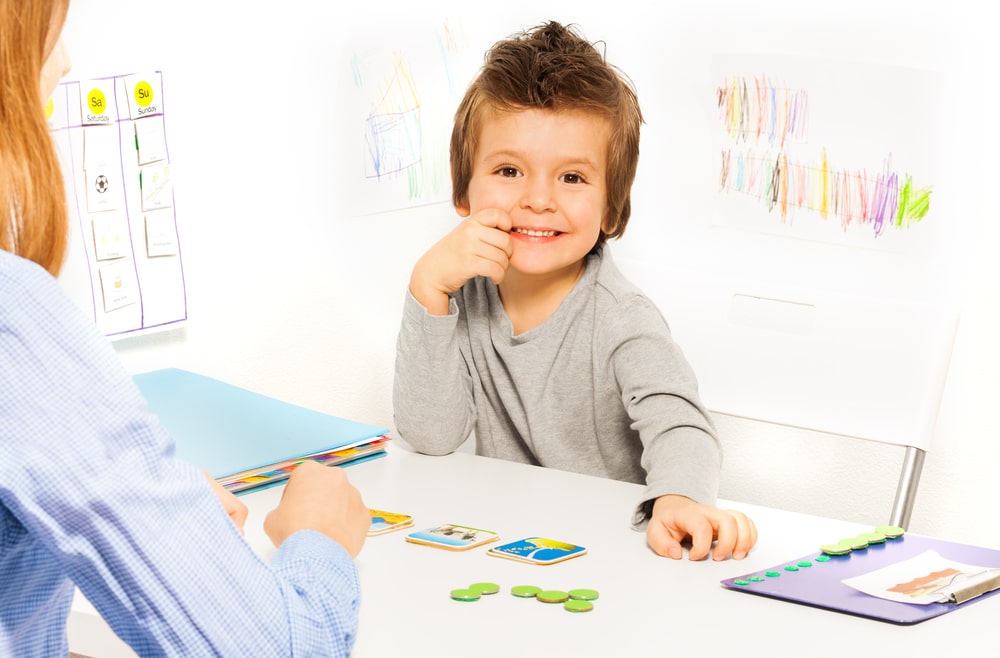
Every child has unique potential waiting to be unlocked, and center-based Applied Behavior Analysis (ABA) therapy settings are specifically designed to foster that growth. Whether your child is navigating social challenges or developing essential life skills, these specialized environments offer tailored support in a structured, engaging atmosphere.
The skills children learn in center-based ABA therapy are comprehensive and life-changing—from communication and social interaction to self-regulation and academic readiness. The dedicated Board Certified Behavior Analysts (BCBAs) and trained therapists in these centers employ evidence-based strategies that not only engage children but also inspire confidence and independence. As parents in Atlanta and Savannah explore ABA therapy options, understanding the array of skills your child can acquire is key to supporting their developmental journey.
Applied Behavior Analysis (ABA) therapy is a scientifically validated approach used to improve specific behaviors in children, particularly those with Autism Spectrum Disorder (ASD). Recognized by the CDC as an evidence-based treatment, ABA is rooted in the principles of behaviorism, which demonstrates that behavior can be learned and modified through structured environmental interaction.
This therapeutic approach uses proven techniques to teach new skills and reduce challenging behaviors. By breaking complex tasks into smaller, manageable steps, ABA helps children learn and practice essential skills in a supportive, systematic manner. Research published in BMC Psychiatry shows that comprehensive ABA-based interventions demonstrate medium to significant effects on intellectual functioning and adaptive behavior in children with ASD.
One of the core elements of ABA therapy is positive reinforcement. When a child demonstrates a desired behavior, they receive a reward—ranging from verbal praise to tangible reinforcement or preferred activities. Over time, children learn to associate positive behaviors with positive outcomes, increasing the likelihood of repetition. This approach not only encourages skill development but also boosts confidence and intrinsic motivation.
ABA therapy is highly individualized, with programs tailored to each child’s unique needs, strengths, and learning style. This personalized approach ensures that treatment is both practical and engaging, allowing children to progress at their own pace while building a foundation for lifelong success.
Center-based ABA therapy offers a controlled, resource-rich environment where children receive intensive, structured intervention. At Step It Up ABA’s Atlanta and Savannah locations, these centers are staffed by trained BCBAs and Registered Behavior Technicians (RBTs) who are well-versed in ABA principles and skilled at implementing individualized treatment plans.
The consistency and structure provided in center-based settings are crucial to fostering accelerated learning and development.
One of the main advantages of center-based settings is the opportunity for children to interact with peers and adults in a safe, supportive environment. Social interactions can be particularly challenging for children with ASD, but in a center setting, they have consistent opportunities to practice these skills in a supervised, structured context. This allows them to build confidence and develop meaningful relationships with others who share similar experiences.
Additionally, center-based ABA settings provide access to a comprehensive range of resources and therapeutic tools that may not be available in home-based settings. From specialized sensory equipment to technology-assisted learning tools, visual supports, and adaptive materials, these centers are equipped to address each child’s diverse needs. The collaborative nature of center-based ABA also means that parents and caregivers can work closely with therapists, ensuring continuity and consistency across all environments.
The skills children learn in center-based ABA therapy are comprehensive and address multiple developmental domains. These skills can be broadly categorized into several key areas, each playing a vital role in the child’s overall growth, well-being, and future success.
Communication is one of the most important skills children learn in center-based ABA therapy. For children with ASD, developing effective communication abilities is often a primary goal. In a center-based setting, therapists use various evidence-based techniques to help children improve their ability to express themselves and understand others. This can involve both verbal and non-verbal communication, depending on the child’s individual needs and abilities.
Discrete Trial Training (DTT) is a common approach that breaks communication skills into smaller, teachable components. For example, a child might first learn to make eye contact, then to use functional gestures, and finally to form words or sentences. By practicing these skills in a structured, supportive environment with immediate feedback, children can gradually build comprehensive communication abilities.
Therapists also employ Natural Environment Teaching (NET) to help children develop communication skills in real-life contexts. This approach incorporates learning opportunities into everyday activities, such as playing with toys, participating in group activities, or requesting preferred items. By practicing communication in natural contexts, children learn to apply their skills flexibly across various settings and situations.
Among the critical skills children learn in center-based ABA therapy are social competencies essential for forming and maintaining relationships with peers and adults. In this structured environment, children have consistent opportunities to practice social interactions in a supportive setting. ABA therapy improves social skills by helping children learn to initiate and maintain conversations, share, take turns, understand social cues, and navigate group dynamics. Therapists use individualized techniques and positive reinforcement to help children build these skills and apply them more confidently during everyday interactions.
Social stories are one effective method for teaching social skills. These short, simple narratives describe social situations and provide guidance on appropriate responses. Social stories help children understand behavioral expectations in different contexts and provide a framework for practicing social interactions before encountering them naturally.
Group activities are also a key component of social skills training. By participating in structured group activities, such as cooperative games, circle time, or peer play sessions, children practice interacting with peers, taking turns, following group rules, and developing empathy. These activities provide a safe environment for children to develop social competencies and build meaningful relationships with others.
Daily living skills, also called adaptive behavior skills, are essential competencies children learn in center-based ABA therapy to foster independence and self-sufficiency. These skills include dressing, grooming, toileting, eating, and basic household tasks. In center-based ABA settings, therapists work systematically with children to develop these skills through structured teaching and natural environment learning.
Task analysis is a fundamental technique used in ABA therapy that involves breaking down complex tasks into smaller, manageable steps. For example, the skill of “getting dressed” might be broken into individual steps: selecting clothes, putting on underwear, putting on pants, putting on a shirt, and fastening buttons or zippers. By practicing and mastering each step individually, children gradually build the ability to complete the entire task independently.
Therapists often use visual supports, such as pictures, charts, or written instructions—to help children understand the steps involved in daily living tasks. These supports provide a clear, concrete guide for completing tasks and can be particularly beneficial for children who are visual learners or have difficulty with verbal instructions. Visual supports can be faded over time as independence increases.
Academic readiness is another crucial area where skills children learn in center-based ABA therapy prepare them for educational success. These competencies are essential for thriving in school and other learning environments. Therapists use evidence-based techniques to help children develop a range of academic skills, from foundational concepts like counting, letter recognition, and color identification to more advanced skills like reading comprehension, mathematics, and problem-solving.
Direct instruction involves explicit, systematic teaching of specific skills. For example, a therapist might use flashcards to teach letter recognition, manipulatives to teach counting and basic math concepts, or structured reading programs to build literacy skills. By providing clear, consistent instruction with immediate feedback and reinforcement, therapists help children build a strong academic foundation.
Play-based learning is another approach that incorporates academic concepts into engaging activities. This might include playing with blocks to teach spatial relationships and counting, participating in scavenger hunts to practice reading and following directions, or using educational games to reinforce various academic concepts. By making learning enjoyable and relevant, therapists help children stay motivated and engaged in the learning process.
Emotional regulation is among the most valuable skills children learn in center-based ABA therapy. This critical ability allows children to recognize, understand, and manage their feelings appropriately in various situations. In center-based ABA settings, therapists work with children to develop strategies for identifying their emotions, expressing them appropriately, and using effective coping strategies to manage difficult feelings.
Social-emotional learning (SEL) programs provide structured lessons on topics such as identifying emotions in themselves and others, understanding different perspectives, managing stress and anxiety, and problem-solving interpersonal conflicts. These programs help children develop emotional literacy and build the skills needed to regulate emotions effectively in various situations.
Therapists may also teach relaxation techniques to help children manage overwhelming emotions. This can include activities such as deep breathing exercises, progressive muscle relaxation, mindfulness practices, or sensory-based calming strategies. By practicing these techniques in a supportive environment with guidance from trained professionals, children learn to use them independently when feeling overwhelmed, anxious, or stressed.
Measuring progress is an essential component of monitoring the skills children learn in center-based ABA therapy. This allows therapists and parents to track development objectively and make data-driven adjustments to treatment plans. At Step It Up ABA, therapists use various tools and methods to monitor progress and ensure children are making meaningful, measurable gains. Center-Based ABA Therapy Nurtures Social Skills by helping children practice communication, cooperation, and social interactions in a structured learning environment.
Systematic data collection involves recording specific information about the child’s behavior and skill acquisition. This can include metrics such as the number of times a child completes a task independently, the percentage of correct responses during teaching trials, the duration of appropriate engagement, or the level of prompting required. By analyzing this data regularly, therapists can identify patterns, celebrate successes, and make informed decisions about modifying treatment strategies.
In addition to ongoing data collection, therapists use standardized assessments, such as the Vineland Adaptive Behavior Scales or other validated tools—to measure progress. These assessments provide benchmarks for comparing the child’s skills to developmental norms and can help identify areas of strength and areas needing further development. By combining continuous data collection with periodic standardized assessments, therapists gain a comprehensive picture of the child’s progress and can adjust treatment plans accordingly.
Regular communication with parents is crucial for tracking progress across all environments. During scheduled meetings, BCBAs share data, discuss goals, celebrate achievements, and collaborate with families to ensure skills are generalizing to home and community settings. ABA Centers Design Daily Schedules to provide structure and consistency throughout the day, helping parents understand the routines and reinforce relevant skills at home. This partnership approach supports consistent skill development and meaningful treatment outcomes.
The skills children learn in center-based ABA therapy offer substantial, long-lasting benefits, providing them with the competencies, confidence, and support they need to reach their full potential. Through a combination of structured teaching, positive reinforcement, opportunities for peer interaction, and individualized treatment plans, ABA helps children develop essential skills in communication, social interaction, daily living, and academic readiness.
One of the key advantages of the skills children learn in center-based ABA therapy is their ability to promote long-term success and independence. By building a strong foundation of functional skills in a supportive environment, children are better equipped to navigate the challenges of daily life, succeed in school, form meaningful relationships, and achieve their personal goals. The skills learned through ABA therapy can have a lasting, transformative impact—improving quality of life and fostering independence well into adolescence and adulthood.
For families in Atlanta and Savannah, Step It Up ABA provides comprehensive center-based services for children ages 2-18. Understanding the skills children learn in center-based ABA therapy and how your child can benefit is crucial for supporting their developmental journey. By working closely with qualified BCBAs and staying actively involved in the treatment process, parents can help ensure their child receives the individualized support they need to thrive.
Ready to take the next step? Contact Step It Up ABA today to learn more about our center-based services and how we can support your child’s skill development and growth.