
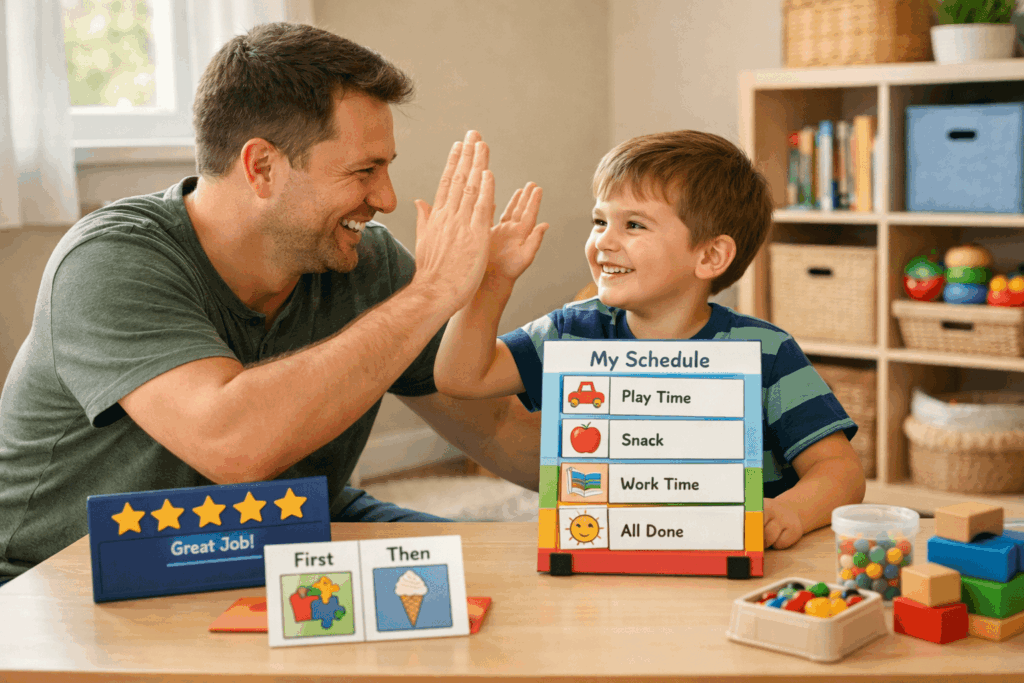
How to Reinforce ABA Therapy at Home: A Parent’s Guide to Supporting Your Child Between Sessions

How to Reinforce ABA Therapy at Home: A Parent’s Guide to Supporting Your Child Between Sessions
Posted on December 23, 2025

Applied Behavior Analysis (ABA) therapy sessions provide essential structure and learning opportunities for children with autism spectrum disorder (ASD), but the time between sessions is equally critical for maintaining momentum and building new skills. Parents who actively reinforce ABA therapy at home can significantly enhance their child’s progress and help skills generalize across different environments. This comprehensive guide empowers you with practical strategies to support your child’s development every day.

Understanding the Foundation of ABA Therapy

Applied Behavior Analysis is an evidence-based scientific discipline that focuses on understanding and improving human behavior. According to the Behavior Analyst Certification Board (BACB), ABA is grounded in principles of behaviorism that emphasize observable and measurable behaviors, allowing therapists and parents to identify specific behaviors that need improvement and systematically apply interventions to promote positive changes.

ABA therapy involves breaking down complex behaviors into smaller, manageable components and reinforcing positive behaviors through structured teaching methods. The National Institute of Mental Health recognizes ABA as one of the most effective interventions for children with autism, with decades of research supporting its efficacy in developing essential life skills.

For parents looking to understand how their child’s therapy is structured, learning about the ABC model of behavior provides crucial insight into how behaviors are analyzed and addressed. By familiarizing yourself with core ABA concepts and techniques, you create a supportive environment that complements your child’s therapist’s efforts and maximizes therapeutic benefits.

Why Consistency Matters: The Key to Successful Skill Development

Consistency forms the cornerstone of successful ABA therapy implementation. Research published in the Journal of Applied Behavior Analysis demonstrates that when children receive consistent reinforcement of positive behaviors across settings, they learn and retain new skills more effectively.

The Benefits of Consistent Home Reinforcement

Children with autism often thrive on routine and predictability. When parents consistently apply ABA techniques at home, it helps create a structured environment that:

  • Reduces anxiety by providing clear expectations
  • Accelerates learning through repeated practice opportunities
  • Promotes generalization of skills across different settings
  • Maintains therapeutic momentum between professional sessions
  • Builds confidence through predictable responses to behaviors

Therapy sessions typically occur only a few times per week, making the time between sessions critical for maintaining progress. By integrating ABA techniques into daily routines, you provide continuous support and reinforcement, helping your child build on the progress made during professional therapy.

Understanding when to start Abi therapy can help you appreciate how early and consistent intervention creates the foundation for long-term success.

Essential ABA Techniques You Can Use at Home

Discrete Trial Training (DTT)

Discrete Trial Training is one of the most fundamental ABA techniques that can be effectively reinforced at home. DTT involves breaking down complex tasks into smaller, manageable steps, with each step taught individually and positive reinforcement provided for correct responses.

How to implement DTT at home:

  • Identify a specific skill to teach (e.g., identifying colors, following two-step directions)
  • Break the skill into discrete components
  • Present one component at a time with a clear instruction
  • Provide immediate reinforcement for correct responses
  • Practice consistently in short, focused sessions (5-10 minutes)

Natural Environment Teaching (NET)

Natural Environment Teaching uses everyday activities and routines to teach new skills, making learning more organic and meaningful. This approach, endorsed by Autism Speaks, emphasizes learning in natural settings to improve skill generalization.

Examples of NET opportunities:

  • Mealtime: Teaching requesting skills, turn-taking, and utensil use
  • Bath time: Practicing self-care routines and following multi-step directions
  • Playtime: Encouraging social interactions, sharing, and imaginative play
  • Shopping trips: Learning to wait patiently, make choices, and use money concepts

For additional guidance on teaching skills during natural routines, explore our article on what happens during a day of ABA therapy.

Prompting and Fading Strategies

Prompting involves providing cues or assistance to help your child perform a desired behavior, while fading gradually reduces the level of support as proficiency increases. This technique builds independence and confidence.

Types of prompts (from most to least intrusive):

  1. Physical prompts: Hand-over-hand guidance
  2. Modeling: Demonstrating the behavior
  3. Gestural prompts: Pointing or other gestures
  4. Verbal prompts: Spoken instructions or cues
  5. Visual prompts: Pictures or written reminders

The goal is to systematically fade prompts so your child can perform the skill independently without constant support.

Creating a Structured Learning Environment at Home

Establishing Consistent Daily Routines

Structure and predictability are essential for children with autism. According to Autism Ontario, consistent routines reduce anxiety and create a framework that supports learning and positive behavior.

Steps to create effective routines:

  1. Establish consistent times for meals, activities, and bedtime
  2. Use transition warnings (“In 5 minutes, we’ll clean up”)
  3. Maintain the same sequence of activities each day
  4. Prepare your child for changes to the routine in advance

Learn more about the power of predictability in our guide to structured daily schedules in ABA centers.

Designing Designated Learning Spaces

Creating dedicated learning areas at home can enhance the effectiveness of ABA strategies by minimizing distractions and establishing clear behavioral expectations.

Key elements of effective learning spaces:

  • Minimal distractions: Choose quiet areas away from TV, windows, and high-traffic zones
  • Organized materials: Keep learning materials accessible and well-organized
  • Appropriate seating: Ensure furniture is the right size and comfortable
  • Good lighting: Provide adequate natural or artificial light
  • Visual supports: Display schedules, behavior charts, and visual cues

Implementing Visual Supports

Visual supports provide clear, concrete representations of expectations and routines, helping children understand and follow daily activities. The National Autism Center identifies visual supports as an evidence-based practice for individuals with autism.

Types of visual supports to use:

  • Visual schedules: Pictures or words showing the day’s activities in sequence
  • First-Then boards: Simple two-step visual showing “First [task], Then [reward]”
  • Social stories: Short stories with pictures explaining social situations
  • Behavior charts: Visual tracking systems for monitoring progress
  • Step-by-step task analysis charts: Breaking complex tasks into visual steps

For practical applications of visual supports, see our article on using ABA strategies in public settings.

Integrating ABA Strategies into Daily Activities

Morning Routines

Morning routines offer excellent opportunities to reinforce ABA strategies:

  • Use visual schedules to outline getting-ready steps
  • Provide positive reinforcement when your child completes tasks independently
  • Use prompting and fading to teach dressing, tooth-brushing, and grooming skills
  • Practice requesting needed items (toothbrush, clothes, breakfast)

Mealtime Opportunities

Meals provide natural teaching moments for multiple skills:

  • Communication skills: Requesting food, drinks, or utensils
  • Social skills: Taking turns, saying “please” and “thank you”
  • Self-help skills: Using utensils, pouring drinks, cleaning up
  • Behavioral expectations: Sitting appropriately, waiting patiently

Understanding functional communication training can help you teach effective requesting skills during mealtimes.

Playtime and Recreation

Play provides rich opportunities for skill development:

  • Encourage turn-taking during games
  • Practice sharing toys and materials
  • Model and reinforce appropriate peer interactions
  • Use play to teach problem-solving and flexibility

Bedtime Routines

Consistent bedtime routines support both sleep and skill development:

  • Create a visual bedtime schedule
  • Practice self-care skills (changing clothes, brushing teeth)
  • Use calming activities as positive reinforcement for completing the routine
  • Provide choices within the routine to encourage independence

Effective Communication Strategies for Parents

Using Clear, Concise Language

Children with autism often benefit from simplified, direct communication. Research from the American Speech-Language-Hearing Association (ASHA) emphasizes the importance of clear communication for children with developmental differences.

Best practices for clear communication:

  • Use short, simple sentences (3-5 words for younger children)
  • Give one instruction at a time
  • Allow processing time (5-10 seconds) before repeating
  • Use concrete language rather than abstract concepts
  • Maintain a calm, positive tone

Implementing Visual Communication Tools

Beyond environmental visual supports, visual communication tools can enhance your child’s ability to understand and respond:

  • Picture Exchange Communication System (PECS): Children use pictures to communicate wants and needs
  • Communication boards: Display common requests and responses
  • Choice boards: Offer visual options for activities, foods, or toys
  • Emotion cards: Help identify and express feelings

For more strategies on building communication skills, explore our guide on how ABA therapy supports language development.

Pairing Language with Actions

Consistently pairing spoken words with actions helps children make connections between language and meaning:

  • Narrate your actions (“I’m opening the door”)
  • Label objects and actions during routines
  • Model appropriate language for requests and comments
  • Reinforce any communication attempts, regardless of accuracy

Mastering Positive Reinforcement at Home

Positive reinforcement is the most powerful tool for encouraging desired behaviors and building new skills. The Centers for Disease Control and Prevention (CDC) recognizes positive reinforcement as a core component of evidence-based autism interventions.

Identifying Meaningful Reinforcers

Effective reinforcement requires understanding what motivates your individual child. What one child finds rewarding may not appeal to another.

Categories of reinforcers:

  • Tangible: Toys, stickers, special objects
  • Edible: Preferred snacks or treats (used sparingly)
  • Social: Praise, high-fives, hugs, smiles
  • Activity-based: Extra playtime, favorite games, screen time
  • Sensory: Access to preferred sensory items (fidgets, swings, music)

Learn more about reinforcement principles in our article on positive vs. negative reinforcement in ABA therapy.

Delivering Effective Reinforcement

Key principles for effective positive reinforcement:

  1. Immediacy: Provide reinforcement within 1-3 seconds of the desired behavior
  2. Specificity: Clearly state what behavior is being reinforced (“Great job putting your toys away!”)
  3. Enthusiasm: Show genuine excitement and positivity
  4. Consistency: Reinforce the behavior every time during initial learning
  5. Variety: Rotate reinforcers to maintain motivation

Using Token Systems

Token systems provide a structured way to reinforce behaviors and work toward larger rewards. These systems teach delayed gratification and allow children to accumulate tokens (stickers, points, checkmarks) that can be exchanged for preferred items or activities.

How to implement a token system:

  • Choose tokens (stickers, poker chips, checkmarks on a chart)
  • Determine how many tokens are needed for a reward
  • Decide which behaviors earn tokens
  • Display a token board where your child can see progress
  • Provide the backup reinforcer immediately when tokens are earned

For detailed guidance, read our comprehensive guide to token systems in ABA therapy.

Partnering with Your Child’s ABA Therapist

Maintaining Open Communication

Strong collaboration between parents and therapists ensures consistency and maximizes progress. The Association for Behavior Analysis International (ABAI) emphasizes parent involvement as critical to successful outcomes.

Communication strategies:

  • Schedule regular check-ins with your child’s Board Certified Behavior Analyst (BCBA)
  • Ask questions about specific techniques and goals
  • Share observations about what works well at home
  • Discuss any concerns or challenges promptly
  • Request demonstrations of new techniques

Understanding what to expect in your child’s ABA assessment helps you communicate more effectively with your therapy team.

Sharing Home Data and Observations

Your insights about your child’s behavior at home provide invaluable information for treatment planning:

  • Keep a behavior journal noting successes and challenges
  • Track specific skills your child is working on
  • Document what reinforcers are most effective
  • Note any changes in behavior, sleep, or appetite
  • Share information about new interests or preferences

Observing and Learning from Sessions

Whenever possible, observe your child’s therapy sessions to:

  • See techniques demonstrated by professionals
  • Understand how to respond to specific behaviors
  • Learn proper prompting and reinforcement timing
  • Ask questions about what you’re observing
  • Gain confidence in implementing strategies at home

Participating in Parent Training

Many ABA programs include parent training components. Take advantage of these opportunities to:

  • Learn specific techniques tailored to your child
  • Practice skills with therapist feedback
  • Ask questions in real-time
  • Build confidence in your ability to reinforce strategies
  • Understand the rationale behind specific interventions

Managing Challenging Behaviors at Home

Understanding the Function of Behavior

All behavior serves a function. Understanding why a behavior occurs is essential for addressing it effectively. Behaviors typically serve one of four functions:

  1. Attention: To gain attention from others
  2. Escape/Avoidance: To avoid or escape something unpleasant
  3. Access to tangibles: To obtain a desired item or activity
  4. Sensory/automatic: To fulfill a sensory need

For deeper insight into behavior analysis, read about the ABCs of behavior in ABA therapy.

Implementing Proactive Strategies

Prevention is more effective than reaction. Proactive strategies reduce the likelihood of challenging behaviors:

  • Maintain consistent routines and schedules
  • Provide advance warnings before transitions
  • Offer choices to increase sense of control
  • Ensure adequate sleep, nutrition, and sensory input
  • Teach alternative communication skills
  • Address skill deficits before they lead to frustration

Responding to Emotional Dysregulation

When children experience meltdowns or emotional overwhelm, response strategies matter. Our guide to ABA therapy for emotional regulation provides comprehensive strategies for supporting emotional development.

Effective response strategies:

  • Remain calm and regulated yourself
  • Ensure safety first
  • Use minimal language during the escalation
  • Provide space if needed (while maintaining supervision)
  • Teach and practice coping strategies during calm moments
  • Reinforce the use of appropriate emotional expression

Tracking Progress and Measuring Success

Collecting Data at Home

Data collection doesn’t need to be complicated. Simple tracking methods help you monitor progress and identify patterns:

Simple data collection methods:

  • Frequency counts: Tally marks for how often a behavior occurs
  • Yes/No checklists: Mark whether a skill was performed independently
  • ABC data: Note what happened before, during (Behavior), and after (Consequence)
  • Rating scales: Rate behaviors on a 1-5 scale
  • Duration tracking: Time how long a behavior lasts

Reviewing Progress Regularly

Schedule regular reviews of your child’s progress:

  • Weekly: Review home data and note trends
  • Monthly: Compare progress to baseline and goals
  • Quarterly: Discuss progress with your child’s BCBA
  • Annually: Evaluate overall development and set new goals

Celebrating Milestones and Achievements

Recognition and celebration reinforce effort and build motivation:

  • Acknowledge both small steps and major milestones
  • Create visual progress displays (progress charts, achievement boards)
  • Share successes with extended family members
  • Take photos or videos to document progress
  • Celebrate effort, not just outcomes

Including Siblings in the Process

Involving siblings in your child’s therapy journey benefits the entire family. Research shows that sibling involvement in ABA therapy promotes empathy, provides natural opportunities for social skill practice, and strengthens family bonds.

Ways to include siblings:

  • Explain ABA strategies in age-appropriate terms
  • Encourage siblings to model appropriate behaviors
  • Create opportunities for shared activities and play
  • Praise siblings for patience and support
  • Ensure siblings receive individual attention
  • Include siblings in celebrating achievements

Self-Care for Parents: Sustaining Your Efforts

Reinforcing ABA therapy at home requires significant energy and commitment. According to the National Alliance on Mental Illness (NAMI), parental self-care directly impacts the quality of care provided to children.

Avoiding Burnout

Self-care strategies:

  • Take regular breaks from caregiving responsibilities
  • Maintain your own hobbies and interests
  • Connect with other parents of children with autism
  • Seek support when feeling overwhelmed
  • Practice stress-reduction techniques (meditation, exercise, deep breathing)
  • Set realistic expectations for yourself

Building Your Support Network

No parent should feel alone in this journey:

  • Connect with local or online parent support groups
  • Build relationships with other families from your child’s therapy program
  • Utilize respite care services when available
  • Maintain connections with friends and extended family
  • Consider individual or family counseling if needed

Setting Realistic Expectations

Remember that progress takes time, and every child develops at their own pace:

  • Celebrate small victories
  • Focus on progress, not perfection
  • Understand that setbacks are part of the learning process
  • Adjust expectations based on your child’s individual needs
  • Trust the process and remain patient

Conclusion: Empowering Your Child’s Growth Through Consistent Home Support

When you actively reinforce ABA therapy at home, you become a powerful agent of change in your child’s development. The strategies outlined in this guide—from creating structured environments and using positive reinforcement to maintaining consistent communication with your therapy team—work together to create a comprehensive support system that extends far beyond formal therapy sessions.

Your role in reinforcing ABA strategies at home cannot be overstated. By integrating evidence-based techniques into daily routines, maintaining consistency, and collaborating closely with professionals, you provide your child with the continuous support necessary for meaningful, lasting progress. Every interaction becomes an opportunity for learning, every routine a chance to practice new skills, and every day a step forward in your child’s journey toward greater independence and success.

Remember that you’re not alone in this journey. Your child’s therapy team, support networks, and resources like those available through Step It Up ABA are here to guide and support you every step of the way. With dedication, consistency, and the knowledge you’ve gained from this guide, you can create a home environment where your child thrives, grows, and reaches their full potential.

Ready to Get Started?

If you’re looking for comprehensive ABA therapy services that prioritize parent collaboration and provide extensive training and support, Step It Up ABA in Atlanta, Georgia, offers personalized, compassionate care designed to help your child succeed.
Our team of Board Certified Behavior Analysts and experienced therapists works closely with families to ensure ABA strategies are effectively reinforced at home, creating consistency across all environments. Contact us today to learn more about how we can support your family’s journey.